
Introduction: Maximizing Your Podcast Advertising Investment in 2026
Your podcast ad is live, reaching thousands of engaged listeners. But what happens next? In a landscape where every marketing dollar is scrutinized, hoping for the best is no longer a viable strategy. True success comes from understanding your return on investment (ROI), a crucial practice for both advertisers seeking results and podcasters proving their value.
The Growing Importance of Podcast Advertising
In 2026, the podcasting universe is more vibrant and competitive than ever. Listeners have endless choices, and advertisers are investing significant budgets to reach these highly engaged, niche audiences. This maturity means the days of relying on download numbers alone are over.
Modern campaigns demand sophistication. Advertisers are carefully choosing the right podcast ad format, from authentic host-reads to targeted programmatic ads, to ensure their message resonates. For creators, this shift presents a massive opportunity to demonstrate tangible impact and secure premium partnerships.
Why ROI Tracking is Non-Negotiable
Simply put, ROI measures the revenue generated for every dollar spent on advertising. For advertisers, it’s the ultimate metric for success. For podcasters, providing clear ROI data is what separates you from the competition, justifying your rates and building long-term sponsor relationships.
Effective podcast advertising ROI tracking transforms your show from a creative outlet into a powerful business asset. It’s a core component of all powerful podcast monetization strategies because it provides concrete proof of performance. Without it, you are simply guessing at your campaign’s effectiveness.
This guide will demystify podcast advertising ROI tracking. We’ll break down the essential metrics, modern attribution tools, and actionable strategies you can implement today. At Big Pond Podcasts, we believe in empowering our partners with clarity and confidence, and this guide is your roadmap to proving and improving your advertising impact.
Defining Your Podcast Advertising Goals and Key Metrics
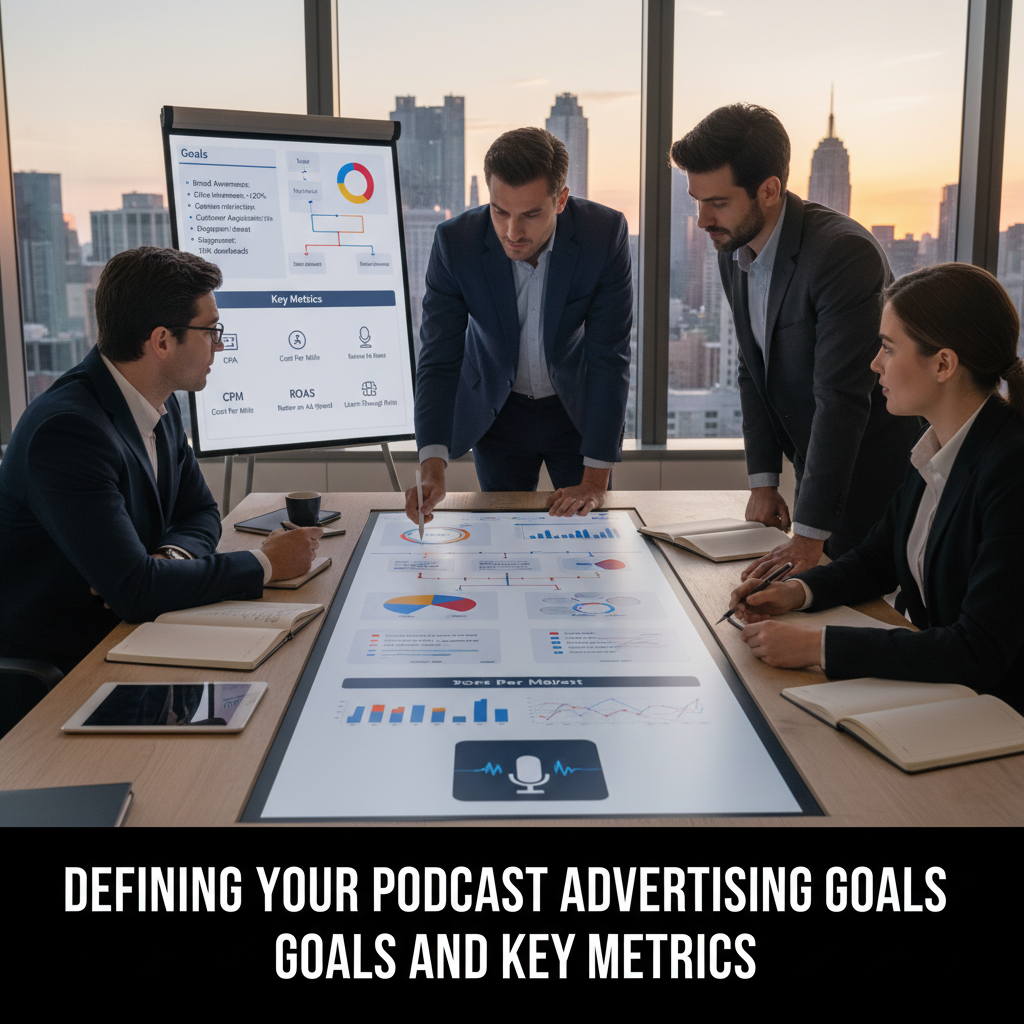
Before you can measure success, you must define it. Effective podcast advertising ROI tracking starts with establishing clear, actionable goals for your campaign. Without well-defined objectives, your data lacks context, making it impossible to determine if your investment paid off.
Setting SMART Objectives for Your Campaigns
Vague goals lead to vague results. Instead of aiming to “increase brand awareness,” use the SMART framework: Specific, Measurable, Achievable, Relevant, and Time-bound. A weak goal is “get more leads.” A SMART goal is, “Generate 200 qualified leads through a unique landing page promoted on three technology podcasts in Q3, with a target Cost Per Acquisition (CPA) under $50.” This level of specificity creates a clear benchmark for success and failure. Choosing the right objectives is also tied to your advertising approach; learn more in our guide on how to choose the right podcast ad format for 2026.

Identifying Essential Performance Indicators (KPIs)
Your KPIs are the specific metrics you’ll use to measure progress toward your SMART goals. The right KPIs depend entirely on your campaign’s primary objective, which typically falls into one of two categories: brand awareness or direct response.
- Brand Awareness KPIs: Focus on reach and impression metrics like downloads, unique listeners, and ad impressions. While harder to tie directly to revenue, they indicate how broadly your message is spreading.
- Direct Response KPIs: Measure immediate listener action. This includes website visits from a vanity URL or UTM code, promo code redemptions, newsletter sign-ups, and ultimately, sales or conversions.
Platforms like Big Pond Podcasts provide robust analytics dashboards that make tracking these diverse metrics seamless. For a comprehensive overview of what to look for, see our breakdown of a podcast analytics dashboard explained: metrics &. The key is to align your KPIs with your goals for a meaningful performance analysis.
Essential Tools and Methodologies for Tracking ROI
Accurate podcast advertising ROI tracking hinges on using the right tools and attribution models. By combining different methodologies, advertisers and podcasters can get a clear view of campaign performance from first listen to final conversion. This data-driven approach moves beyond simple download numbers to measure true impact.
Leveraging Attribution Methods
Effective attribution is the cornerstone of measuring podcast ad performance. The most direct methods include unique promo codes and vanity URLs. A unique code like “SHOW20” directly links sales to a specific podcast campaign.
A vanity URL, such as yourbrand.com/podcast, sends listeners to a dedicated landing page, making it easy to track traffic and conversions. For more advanced measurement, pixel-based tracking can attribute website visits and conversions to listeners exposed to an ad, even if they didn’t click.
Utilizing Analytics Platforms for Comprehensive Data
No single tool tells the whole story. Success requires combining data from several sources. Your podcast hosting platform, like Big Pond Podcasts, provides essential download and listener demographic data.
This is the top-of-funnel view. To see the full picture, you must integrate this with third-party analytics like Google Analytics and CRM data to track final sales. Our guide to the podcast analytics dashboard explained can help you make sense of these numbers.
Best Practices for Data Integration and Reporting
Clean data is crucial for accurate podcast advertising ROI tracking. Establish consistent naming conventions and tracking parameters (like UTMs) across all campaigns from the beginning.
This discipline ensures you can correctly attribute actions to their source. Effective podcast ad campaign management tools for 2026 often have features to help streamline this process, providing a clear and reliable view of your return on investment.
Implementing Advanced Attribution Models for Deeper Insights
To truly understand campaign effectiveness, brands must move beyond basic metrics. Advanced attribution models provide a much clearer view of how podcast ads contribute to conversions. This is crucial for accurate podcast advertising ROI tracking.
Understanding Multi-Touch Attribution
Simple attribution models, like first-touch or last-touch, give 100% of the credit to a single event. This approach often misrepresents the customer’s actual journey. Multi-touch attribution, however, distributes credit across multiple interactions that lead to a conversion.
Several models exist, each offering a different perspective. A linear model divides credit equally, while a time-decay model gives more weight to touchpoints closer to the sale. As detailed in this overview of marketing attribution, a position-based model credits both the first and last interactions most heavily, acknowledging discovery and conversion drivers. The right model depends entirely on your campaign goals.

Considering Listener Journey and Conversion Paths
A listener’s path from hearing an ad to making a purchase is rarely a straight line. They might hear an ad during their commute, see a social media post later, and finally click a search ad to convert days later. Understanding these complex paths is key to valuing each channel appropriately.
Choosing the right model helps you assign proper credit and optimize your entire marketing mix. Knowing your podcast is a powerful first touchpoint justifies continued investment, even if it doesn’t drive the final click. This is a core part of effective Podcast Audience Targeting Strategies for 2026. By understanding the different Podcast Ad Types Explained: Your Complete Guide, you can better map out these potential journeys.
Platforms like Big Pond Podcasts provide the robust analytics needed to navigate these complexities. Ready to get a clearer picture of your campaign performance? Get started with Big Pond Podcasts and leverage our powerful reporting tools.
Optimizing Your Campaigns Based on ROI Data
Collecting data is only the first step. True optimization comes from turning those insights into action. By diligently analyzing your campaign performance, you can make informed adjustments that directly boost your return on investment.
Analyzing Performance and Identifying Trends
Start by looking for patterns within your data. Which podcasts are driving the highest number of conversions? Are certain ad creatives outperforming others? Effective podcast advertising ROI tracking helps you pinpoint your campaign’s strengths and weaknesses. Notice if specific episode themes or release days correlate with spikes in traffic or sales. These trends are your roadmap for optimization.
Making Data-Driven Adjustments to Improve ROI
Once you identify what works, it’s time to adapt. If one show consistently delivers results, consider increasing your ad spend there. Conversely, if a placement isn’t performing, it may be time to reallocate those funds. For a deeper understanding, review our guide on Podcast Ad Placement Best Practices for 2026.
Refine your ad copy and calls-to-action based on what resonates. Small tweaks can lead to significant gains. Sharpening your focus on the right listeners is also crucial; explore advanced Podcast Audience Targeting Strategies for 2026 to maximize your impact.
A/B Testing and Experimentation in Podcast Advertising
Never stop testing. A/B testing is essential for continuous improvement in podcast advertising. You can test different ad scripts, unique offers, or even the ad placement within an episode. For instance, pit a pre-roll ad against a mid-roll ad to see which generates a better response.
Create two versions of host-read copy and track which one drives more traffic. Comparing two distinct calls-to-action can reveal what truly motivates your target audience. These iterative improvements are the key to unlocking better long-term ROI and ensuring your advertising budget works as hard as possible. You can find inspiration in these Effective Podcast Ad Copy Examples for 2026.
Frequently Asked Questions About Podcast Advertising ROI Tracking
Navigating the nuances of podcast advertising can bring up many questions. Here are clear, concise answers to some of the most common inquiries about measurement and performance.
How often should I review my podcast ad ROI data?
Review key performance metrics like downloads, promo code usage, and click-throughs weekly to make timely optimizations. Conduct a deeper strategic review quarterly to assess overall campaign effectiveness, analyze trends, and plan future budget allocations.
Can I track ROI for brand awareness campaigns?
Absolutely. While direct attribution is less straightforward, you can track powerful proxy metrics. Look for sustained spikes in direct website traffic, increases in branded search volume, and growth in social media mentions that correlate with your campaign’s flight dates.
What if I’m a small podcaster – can I still effectively track ROI?
Yes, effective podcast advertising ROI tracking is accessible to everyone. Simple tools like unique promo codes, custom landing pages, and affiliate links work wonders. Platforms like Big Pond Podcasts empower creators of all sizes; for more on this, see our complete guide on monetizing small podcasts.
How do Big Pond Podcasts’ features help with ROI tracking?
Big Pond Podcasts simplifies tracking with an integrated suite of tools. Our platform provides clear data on ad impressions, listener demographics, and engagement through our intuitive dashboard. This unified podcast analytics dashboard explained allows you to see performance at a glance, connecting ad efforts directly to audience response.
What are common pitfalls to avoid?
A major pitfall is setting an overly short attribution window, which ignores long-term brand lift. Another is focusing solely on last-click attribution, which completely undervalues the crucial role podcasts play early in the customer journey.
How can I convince stakeholders of the value of podcast advertising?
Present a clear narrative backed by solid data. Use industry benchmarks, compelling listener survey results, and attribute conversions using promo codes and vanity URLs. Visualizing the data makes the impact tangible and undeniable.
What role does audience segmentation play in improving ROI?
It’s crucial for maximizing efficiency. By targeting specific listener segments, your message reaches the most receptive ears. This increases ad relevance and conversion rates, leading directly to a higher, more predictable return on investment.
Conclusion: Sustained Growth Through Smart Tracking in Podcast Advertising
Mastering podcast advertising ROI tracking is no longer optional in 2026; it is the foundation of sustainable growth for both creators and brands. By setting clear goals and consistently using tools like vanity URLs, promo codes, and post-campaign surveys, you turn advertising spend into a predictable performance channel. This data-first approach empowers advertisers to make smarter buys and helps podcasters conclusively prove their value.
The Future of Podcast Advertising Measurement
The podcasting landscape is rapidly maturing. We are moving beyond simple download numbers toward more sophisticated multi-touch attribution models that paint a fuller picture of listener engagement. The lines between different ad formats are also evolving, making a clear understanding of host-read ads vs. programmatic ads more critical than ever for strategic planning.
To succeed, both advertisers and podcasters must commit to continuous learning. Staying informed about new attribution technologies and platform updates will be the key differentiator between campaigns that thrive and those that fall flat. This is where a knowledgeable partner becomes invaluable.
Partnering for Success in a Data-Driven Landscape
Effectively navigating this data-rich environment requires the right tools and expertise. A robust platform doesn’t just host your audio; it provides the analytics and monetization opportunities needed to flourish. At Big Pond Podcasts, we empower creators by simplifying the complexities of podcast advertising ROI tracking and audience growth.
We provide the tools to help you manage your show, connect with advertisers, and scale your revenue. This allows you to focus on creating the amazing content your audience loves, confident that your growth is built on a solid, data-backed strategy. Ready to turn your podcast into a powerful revenue engine? Get started with Big Pond Podcasts today and unlock your show’s full potential.
