
Introduction: Mastering Podcast Advertising Creative in 2026
Imagine an advertising channel where the audience actively leans in, trusts the messenger, and isn’t distracted by a dozen other browser tabs. That’s the unique power of podcasting, and in 2026, its influence is undeniable. As more listeners tune in, brands and creators are discovering the immense potential of this intimate audio space.
The Evolving Landscape of Podcast Advertising
In 2026, podcasting is a global stage where brands can build deep, lasting connections with highly engaged listeners. The industry continues its impressive growth trajectory as audiences embrace audio content during commutes, workouts, and quiet moments at home. This intimate, screen-free environment makes podcast advertising incredibly effective for reaching targeted demographics.
Success isn’t just about placing an ad; it’s about integrating it into a larger strategy for converting listeners. To do this well requires a plan for building a content funnel around your podcast that moves people from awareness to action.
Why Creative is King in Podcast Campaigns
A listener’s relationship with a podcast host is built on trust and authenticity. A clunky, irrelevant, or generic ad can shatter that connection in an instant. This is why compelling creative is the most critical variable for campaign success.
The right ad creative transforms an interruption into a welcome recommendation. According to an overview of podcast advertising trends, advertising formats that feel native to the show perform exceptionally well. Foundational decisions, like understanding the nuances of host-read vs. programmatic ads, are a core part of your creative strategy. Ultimately, mastering podcast advertising creative best practices is what separates a skipped ad from one that drives real results, and for a deeper dive into effective strategies, consider rethinking your podcast marketing best practices. For the latest insights, explore podcast advertising 2026.
This guide provides the roadmap you need, exploring the strategies and techniques for creating compelling audio ads that resonate with listeners, respect the medium, and deliver outstanding returns.
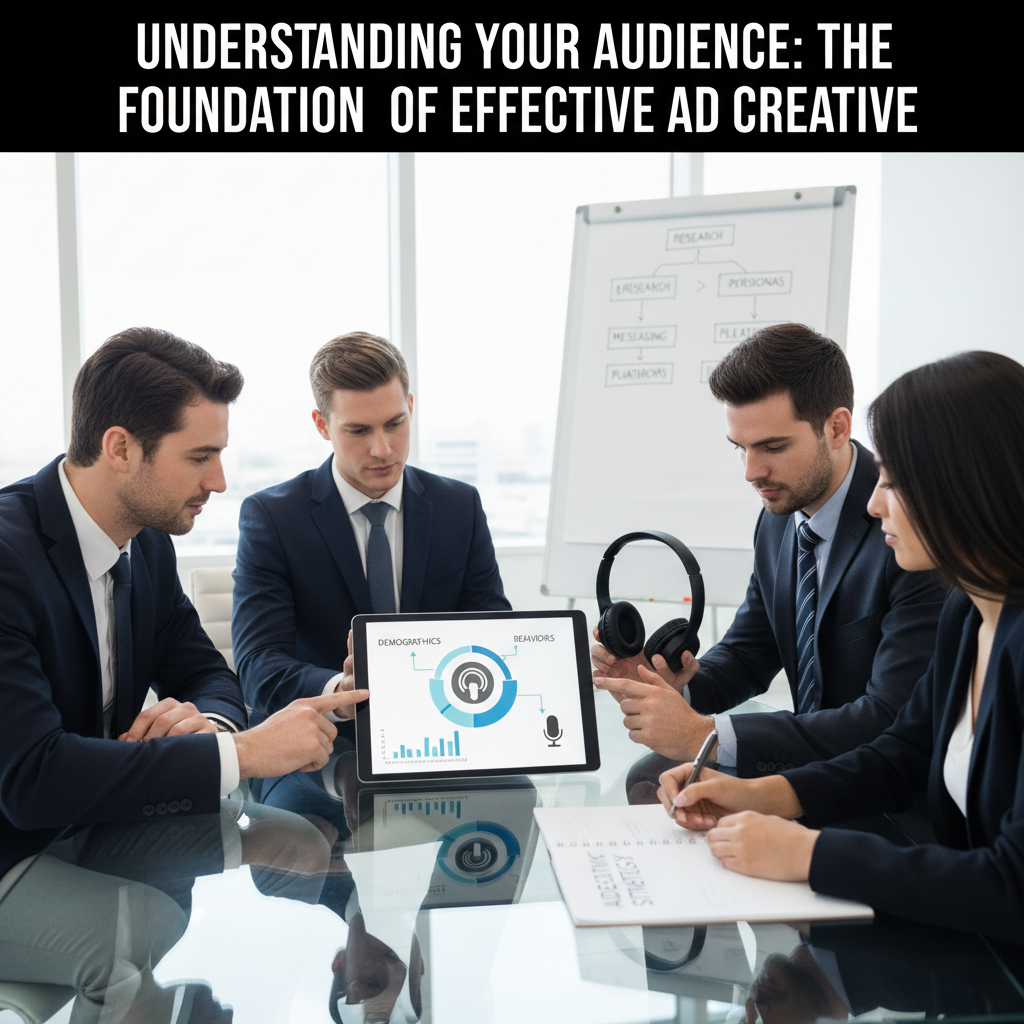
Understanding Your Audience: The Foundation of Effective Ad Creative
Before you write a single word of ad copy, you must know who you are talking to. The most successful campaigns are built on a deep, authentic connection with the listener. This understanding is the cornerstone of all podcast advertising creative best practices.
Deep Dive into Listener Demographics and Psychographics
Effective advertising moves beyond basic demographics like age and gender. You need to explore psychographics—the values, interests, pain points, and lifestyles of your target audience. Are you speaking to tech enthusiasts who value innovation or parents who prioritize convenience and safety?
Knowing these details allows you to craft messages that resonate on an emotional level. For example, an ad for a productivity app in a business podcast should focus on saving time and achieving goals, speaking directly to the listener’s ambition. Truly mastering Podcast Listener Demographics Targeting: Unlock Growth means understanding the why behind their listening habits.
Aligning Creative with Podcast Niche and Tone
An ad that feels out of place is an ad that gets skipped. The tone of your creative must match the tone of the podcast itself. A humorous, informal ad read can work wonders in a comedy show but would feel jarring in a serious investigative journalism podcast.
The goal is for the advertisement to feel like a natural extension of the content, not a disruptive interruption. Listeners of a true-crime show expect a respectful and serious tone, while followers of a pop culture podcast are more receptive to playful and trendy messaging. This alignment is critical for building trust and driving action.
Leveraging Data for Audience Insights
Crafting Compelling Host-Read Ads: Authenticity That Converts
Host-read ads leverage the unique bond between a podcaster and their audience. This direct endorsement feels less like an advertisement and more like a trusted recommendation from a friend. It’s a cornerstone of effective podcast advertising creative best practices.
The Power of the Host’s Voice and Credibility
Listeners tune in because they connect with the host’s personality and expertise. When that host personally vouches for a product or service, it carries significant weight. This authentic endorsement cuts through the noise of traditional advertising, building immediate credibility for the brand. The message is infused with the host’s genuine enthusiasm, making it far more memorable and persuasive than a pre-produced spot.
Developing Engaging Scripts and Talking Points
The key to a great host-read ad is to avoid overly rigid scripts. Brands achieve the best results by providing hosts with clear talking points and creative freedom. This allows the host to integrate the message using their natural voice, even sharing a personal story related to the product. The ad should feel like a seamless part of the conversation. For inspiration, explore some Effective Podcast Ad Copy Examples for 2026. Crafting the right message is crucial, especially when you unlock niche podcast advertising opportunities.
Big Pond Podcasts: Connecting Brands with Authentic Voices
Optimizing Programmatic and Produced Ads for Maximum Impact
While host-read ads offer authenticity, produced and programmatic ads provide scale and precise targeting. Success here hinges on creating ads that capture attention without disrupting the listener’s experience. Applying these podcast advertising creative best practices ensures your pre-recorded spots deliver results.
Key Elements of a Strong Produced Podcast Ad
A high-quality produced ad feels like a natural part of the audio landscape. It begins with a professional voiceover that matches the podcast’s tone—whether it’s energetic, serious, or calming. Sound design is equally crucial; subtle music or sound effects can make an ad memorable, but they should never overpower the message. Finally, the call-to-action (CTA) must be simple and clear, often directing listeners to a unique URL or to use a specific promo code.
Dynamic Ad Insertion: Personalization at Scale
Dynamic Ad Insertion (DAI) is the technology that powers programmatic podcast advertising. It allows advertisers to swap ads in and out of a podcast’s back catalog in real-time.

This technology enables incredible personalization. Ads can be targeted based on the listener’s geographic location, the time of day, or the device they are using. This ensures your message reaches the right ears at the right moment. For brands looking to maximize relevance, mastering Podcast Audience Targeting Strategies for 2026 is essential. Platforms like Big Pond Podcasts give creators the tools to manage these campaigns seamlessly.
A/B Testing and Iteration for Programmatic Success
The Call to Action: Guiding Listeners to Conversion
An engaging ad can hook a listener, but that interest goes nowhere without a clear call to action (CTA). The CTA is the critical final step that turns passive listeners into active customers. It’s one of the most vital podcast advertising creative best practices for ensuring a return on investment.
Clear, Concise, and Compelling CTAs
The cardinal rule is to give your listener one job, and one job only. Listeners are often driving, working, or exercising, making complex instructions impossible to follow. Avoid asking them to visit a site, follow you on social, and use a promo code.
Instead, focus on a single, memorable action. A simple “Visit Brand.com/Podcast” is far more effective than a scattered list of requests. Your CTA should be direct and easy to recall thirty seconds after the ad has finished.
Utilizing Unique URLs and Promo Codes for Tracking
How do you know if your ads are working? Attribution is key. Assigning a unique vanity URL (like YourBrand.com/PodcastName) or a specific promo code (like “PODCAST20”) to each show is non-negotiable.
These tools provide concrete data on which campaigns are driving traffic and conversions. Mastering this is fundamental for successful Podcast Advertising ROI Tracking & Optimization. This data empowers advertisers to reinvest in high-performing shows and helps podcasters prove their value. Big Pond Podcasts simplifies this, offering creators and advertisers a suite of tools to manage campaigns and track every conversion. Ready to see what’s working? Unlock powerful monetization and analytics tools today.
Integrating CTAs Seamlessly into Ad Creative
The best CTAs don’t feel like an interruption; they feel like a natural conclusion. In a host-read ad, the host can transition smoothly: “I’ve been using it every morning. If you want to try it, just head to Brand.com/MyShow.” For produced ads, the CTA should be the powerful final note that resolves the ad’s narrative.
Measuring Success and Refining Your Podcast Ad Creative
Launching a compelling ad is only half the battle. To truly master podcast advertising, you must measure its impact and continuously refine your approach based on real-world data. This essential feedback loop is what separates stagnant campaigns from those that deliver exponential growth and ROI.
Key Performance Indicators (KPIs) for Podcast Advertising
Go beyond basic downloads and impressions to understand genuine engagement. Key metrics include the listen-through rate, which shows if your creative is compelling enough to prevent skips. Website traffic originating from custom vanity URLs (e.g., yourbrand.com/podcast) and clicks on tracked links in show notes provide a direct measure of listener interest.
Ultimately, conversions are the gold standard. These are most effectively tracked through unique promo code redemptions or direct sales attributed to the campaign. For brand-focused campaigns, brand lift surveys conducted before and after the campaign can quantify shifts in audience awareness and perception.
Attribution Models: Understanding the Listener Journey
Podcast attribution is notoriously challenging because consumption is often screen-free, leading to delayed action. Therefore, a multi-touch attribution strategy is essential for a clear picture. The most reliable methods include offering unique, memorable promo codes that are easy for listeners to recall and use later.
Custom vanity URLs also serve as a powerful signal of ad-driven traffic. To fill in the gaps, many brands rely on post-purchase surveys that ask, “How did you hear about us?” This combination helps you connect the dots for effective Podcast Advertising ROI Tracking & Optimization.
Continuous Optimization with Big Pond Podcasts’ Analytics
Frequently Asked Questions About Podcast Advertising Creative
Navigating the nuances of audio-first messaging can be challenging. Here are answers to common questions about podcast advertising creative best practices.
What is the ideal length for a podcast ad?
Ad length typically corresponds to placement. Pre-rolls are often quick 15-second spots. Mid-rolls can run for a more detailed 60 seconds, and post-rolls are usually around 30 seconds. The key is to match your message’s complexity to the allotted time.
Should I use music or sound effects in my podcast ads?
It depends on the format. For authentic host-read ads, minimal production is best to maintain the podcaster’s natural style. For programmatic or pre-produced spots, music and sound effects can help your ad stand out and create a memorable audio signature.
How often should I refresh my ad creative?
To combat ad fatigue, plan on refreshing your creative every 4 to 8 weeks. Monitor performance metrics closely. A dip in conversion rates is a clear signal that your audience is ready for a new message.
What’s the difference between host-read and programmatic ad creative?
Host-read ads are delivered by the podcast host in their own voice, creating a powerful endorsement. Programmatic ads are pre-recorded spots that are automatically inserted into episodes, often targeting specific listener demographics. Understanding how to choose the right podcast ad format for 2026 is crucial for campaign success.
How can I ensure my ad creative resonates with diverse audiences?
Use inclusive language and ensure your ad scenarios reflect a wide range of experiences. Avoid stereotypes and actively seek out shows that reach different communities. At Big Pond Podcasts, we champion this approach, believing that the best connections are built on authenticity and respect for every listener.
Conclusion: Elevating Your Podcast Advertising with Strategic Creative
In the dynamic world of audio, one truth remains constant: effective creative is the cornerstone of successful podcast advertising. Placement and targeting get your ad in front of the right ears, but a compelling message is what captures listener attention and drives action. Simply buying inventory is no longer enough to guarantee results in 2026.
The journey to powerful advertising begins with authenticity. As we’ve explored, aligning your brand’s voice with the host’s unique style creates an endorsement that feels genuine, not forced. This is a key differentiator when understanding host-read ads vs. programmatic ads. From there, crafting a clear, singular call-to-action and using sound design to create an immersive experience are critical steps.
Implementing these podcast advertising creative best practices transforms your campaign from a simple interruption into a valuable part of the listener’s experience. It’s about building a connection that fits seamlessly within a larger strategy, much like building a content funnel around your podcast for more revenue. By respecting the listener and the medium, brands can achieve remarkable engagement and ROI that other channels struggle to match.
As you look to elevate your campaigns, partnering with the right platform is essential. Big Pond Podcasts provides the tools and insights for both creators and advertisers to thrive. We empower you to manage campaigns, discover growth opportunities, and monetize effectively, so you can focus on creating ads that truly connect.
The future of podcasting belongs to those who master the art of the message. Are you ready to create ads that not only reach but also resonate with your ideal audience? Get started with Big Pond Podcasts today and discover how our platform can amplify your creative strategy.
