Introduction: Navigating the Podcast Advertising Landscape in 2026
In 2026, the human voice remains one of the most powerful marketing tools, and nowhere is this more evident than in the world of podcasting. The intimate, one-to-one connection between a host and their listener has cemented podcasts as a mainstream advertising powerhouse. Brands are no longer asking if they should advertise on podcasts, but how they can do so most effectively to capture attention and drive results in an increasingly vibrant audio space. The boom isn’t slowing down; with listenership more engaged than ever, podcasts offer a direct line to highly specific, dedicated communities. For advertisers, this means unparalleled access to attentive audiences, while for podcasters, it represents a significant and sustainable revenue stream.
The key to unlocking this potential, however, goes beyond simply finding the right show. This is where the real strategy begins, because the choice between a pre-roll, mid-roll, host-read, or dynamically inserted ad can make or break a campaign’s ROI. An advertiser might find their message lost in a format that doesn’t fit the show’s pacing, while a podcaster could alienate their audience with a disruptive ad placement. Understanding how to choose the right podcast ad format is the critical skill that separates a forgettable sponsorship from a highly profitable partnership, directly impacting everything from brand recall to listener retention. This article is your definitive guide to making that choice. We will demystify the various ad formats, explore their pros and cons, and provide a clear framework for reaching your goals—whether you’re an advertiser aiming for maximum impact or a creator looking to monetize effectively. For a look ahead, explore essential podcast ad formats in 2026. Platforms like Big Pond Podcasts are dedicated to helping creators and brands forge these successful partnerships.
Understanding the Core Podcast Ad Formats
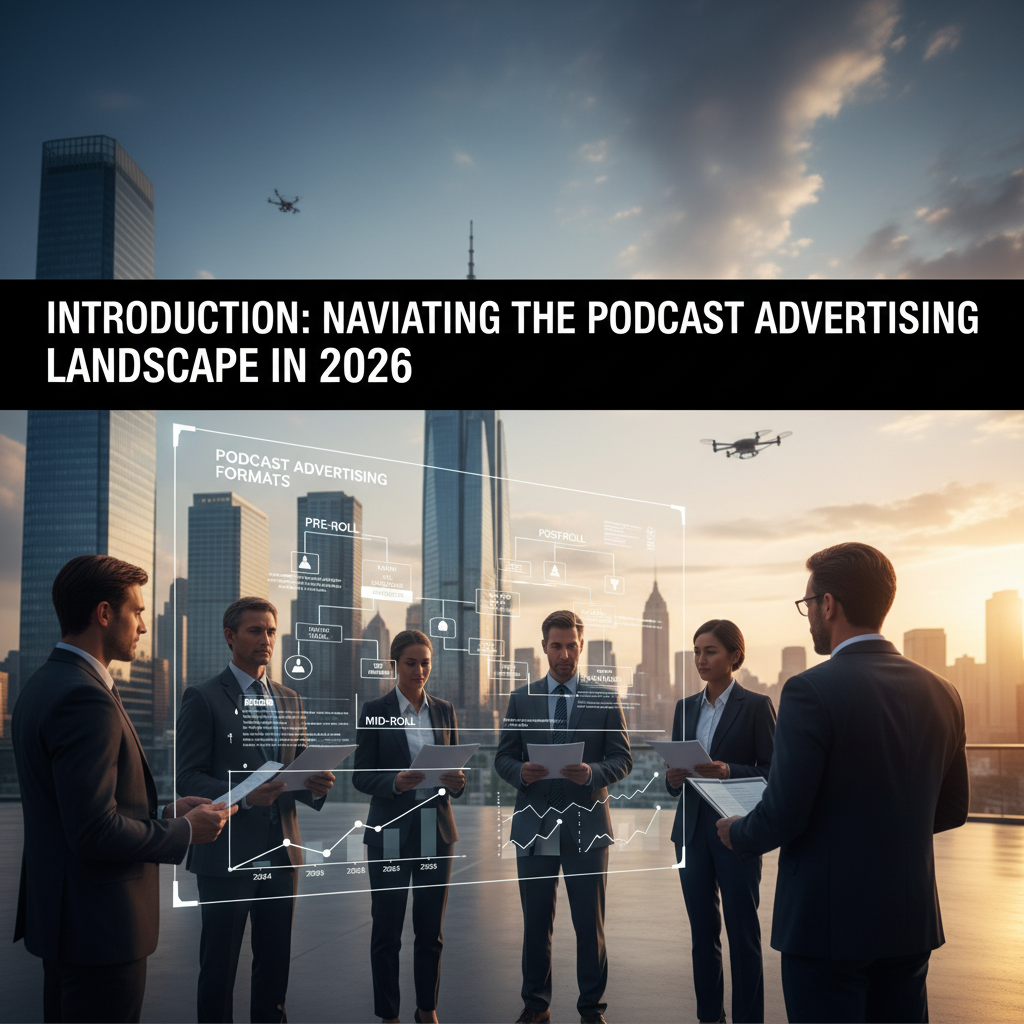
To determine how to choose the right podcast ad format, you first need to grasp the fundamental options available. Each format offers distinct advantages for both advertisers and creators, impacting everything from campaign effectiveness to audience reception. The three primary types are host-read, announcer-read, and programmatic ads, each catering to different goals and strategies.
Host-Read Ads: The Personal Touch
Host-read ads are delivered by the podcast host in their own voice and style. This format leverages the deep trust and rapport the host has built with their audience, making the endorsement feel more like a genuine recommendation than a traditional advertisement. Listeners are more receptive to messages from a voice they know and respect. For creators on platforms like Big Pond Podcasts, this format is a powerful way to monetize their influence authentically. For advertisers, it provides an unparalleled level of connection and credibility. To learn more, explore our deep dive into podcast host-read ad effectiveness.
Announcer-Read Ads: Professional and Scalable
Announcer-read ads, often called “produced spots,” are pre-recorded by a professional voice actor and produced by the advertiser. The same audio file can be run across multiple podcasts, ensuring brand messaging is consistent, polished, and perfectly on-brand every time. This scalability makes them a go-to choice for large-scale campaigns where control over the final message is paramount. While they lack the personal touch of a host-read spot, their professional quality and ease of distribution are significant advantages for media buyers and brands aiming for broad reach.
Programmatic Ads: Precision Targeting
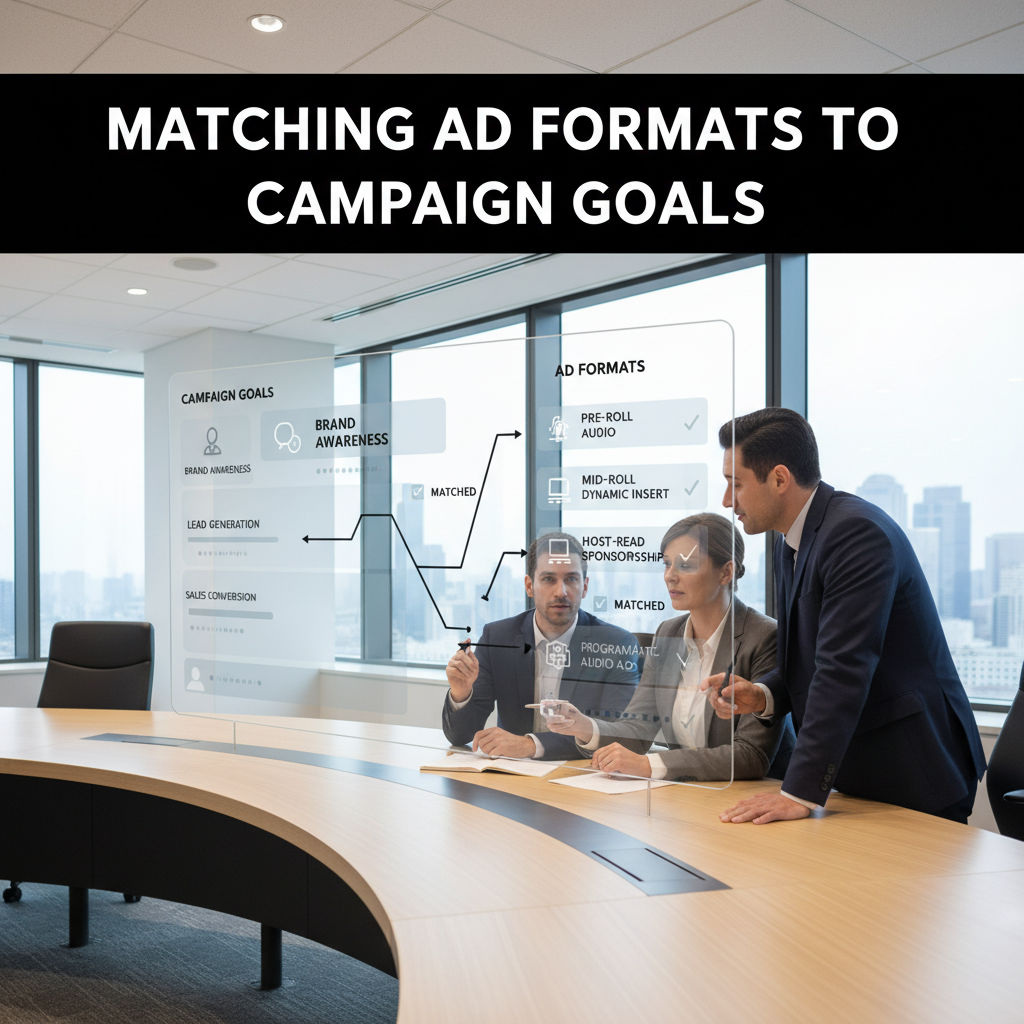
Matching Ad Formats to Campaign Goals
The most critical step in determining how to choose the right podcast ad format is aligning it with your campaign’s core objective. An ad designed for brand recall will look very different from one engineered to drive immediate sales. By clearly defining what success looks like for your campaign, you can select a format that is best positioned to deliver optimal results.
Brand Awareness and Engagement
When your primary goal is to build brand affinity, trust, and long-term recognition, the host-read ad is king. This format leverages the intimate, authentic connection between a podcast host and their listeners. The ad often feels less like a commercial and more like a trusted recommendation from a friend, effectively transferring the listener’s loyalty from the host to your brand. The power of a personal endorsement can create a lasting impression that far outlives the campaign itself. To learn more about this approach, explore the details of podcast host-read ad effectiveness.
Direct Response and Conversions
For direct response campaigns focused on measurable actions—like website visits, app downloads, or sales—clarity and a compelling call-to-action (CTA) are paramount. Announcer-read ads can excel here, delivering a consistent and professionally produced message that is easily scalable across multiple shows. However, a well-integrated host-read ad can also be highly effective, provided the CTA is simple and memorable, such as a unique promo code or a dedicated vanity URL. The key is to make it easy for the listener to act immediately while ensuring the ad delivery feels natural within the show’s context.
Niche Audience Reach
Factors to Consider When Making Your Choice
Navigating how to choose the right podcast ad format requires a strategic look at three core pillars: your campaign’s financial scope, your creative vision, and your target listener. Balancing these elements is key to maximizing your return on investment and achieving your goals, whether you’re an advertiser or a creator seeking monetization.
Budget and Scalability
Your budget is the most immediate factor influencing your choice. Host-read ads, celebrated for their authentic delivery and high listener engagement, typically command higher CPMs (cost per mille). They are an investment in the host’s earned trust and credibility. In contrast, programmatic and announcer-read ads often provide a more cost-effective solution for broader campaigns. These formats excel at scalability, allowing brands to reach a vast audience across numerous shows efficiently. The decision isn’t just about cost, but about balancing your budget with the desired campaign scale and impact.
Creative Control and Flexibility
How much hands-on control do you want over the final ad? With host-read ads, you are collaborative, providing key talking points but trusting the host to weave them into their own style. This fosters authenticity that resonates deeply but means relinquishing precise script control. Conversely, pre-produced announcer-read ads give you complete creative authority over every word, sound effect, and tone. This ensures brand message consistency across all placements but can sometimes lack the personal touch that makes podcast ads so powerful.
Audience Demographics and Podcast Niche
Ultimately, the ad format’s success hinges on audience alignment. Before committing to a format, you must deeply understand the podcast’s listener base. A perfectly crafted host-read ad will fall flat if the listeners aren’t interested in your product. Platforms like Big Pond Podcasts empower advertisers with detailed analytics, helping you match your brand with shows that have the right audience. Understanding podcast listener demographics targeting is the foundation for any successful campaign. For creators, this means leveraging a platform that showcases your unique audience value to potential advertisers. Big Pond Podcasts provides the tools and insights to ensure that vital connection is made. Ready to find the perfect podcasts for your brand or monetize your own valuable audience? Discover growth opportunities with us today.
Leveraging Analytics and Optimization for Success
Choosing an ad format is not a one-time decision; it’s the beginning of an ongoing optimization process. The most successful campaigns, whether you’re a podcaster or an advertiser, rely on data to refine their strategy. True mastery over how to choose the right podcast ad format comes from listening to what your performance metrics tell you.
Tracking Ad Performance
To understand what’s working, you must track key performance indicators (KPIs). Go beyond basic download numbers and analyze metrics specific to your ad campaigns. Essential data points include impressions (how many times an ad was served), listen-through rates, and conversion metrics. Conversions can be tracked using unique promo codes, vanity URLs, or post-purchase surveys asking customers where they heard about the brand. A deep dive into these podcast ad measurement metrics will reveal which formats are generating the most engagement and return on investment.
A/B Testing and Iteration
Never assume your first choice is the final one. A/B testing is a powerful tool for optimization. You can experiment by running a host-read mid-roll ad in one episode and a brand-produced pre-roll ad in another, then compare the results. Test different ad copy, calls-to-action (CTAs), or even the length of your ad spot. For example, does a concise 30-second ad drive more traffic than an in-depth 60-second spot? This iterative process of testing, analyzing, and refining your approach is what separates good campaigns from great ones.
Partnering with the Right Platforms
Manually tracking these variables can be overwhelming. This is where a dedicated podcasting platform becomes an invaluable partner. For instance, Big Pond Podcasts provides creators and advertisers with a robust analytics suite designed for easy campaign management. Our integrated dashboards simplify the process of tracking impressions, measuring conversions, and comparing the performance of different ad formats. By providing clear, actionable data, we empower you to make informed decisions and optimize your ad strategy for maximum impact and revenue growth.
Frequently Asked Questions About Podcast Ad Formats
What is the most effective podcast ad format for small businesses?
For small businesses, host-read ads often deliver the highest impact. The personal endorsement from a trusted host can build immediate credibility and drive action, especially within niche audiences. A pre-roll or mid-roll host-read ad can feel like a genuine recommendation rather than a disruptive advertisement, leading to better listener reception and stronger results on a targeted scale.
How do I track the ROI of my podcast ad campaigns?
Tracking podcast ad ROI involves a few key methods. The most common are unique promo codes and vanity URLs specific to each campaign. You can also use post-purchase surveys that ask customers where they heard about you. For more advanced tracking, many platforms allow for pixel-based attribution to measure website visits and conversions directly from an ad. For a deeper dive, explore our guide to Podcast Ad Measurement Metrics: Your 2026 Guide.
Can I combine different ad formats in a single campaign?
Absolutely. Combining formats can be a powerful strategy. For instance, you could run a host-read mid-roll ad on your primary target podcast to build trust, while simultaneously running programmatic ads across a wider network to maximize reach and awareness at a lower cost. This hybrid approach helps you balance deep impact with broad efficiency.
What are the typical costs associated with host-read versus programmatic ads?
Host-read ads are typically priced on a CPM (cost per thousand listeners) or a flat-fee basis, with rates varying based on the host’s influence and audience size. They are generally more expensive due to the creative effort and endorsement value. Programmatic ads are almost always sold via CPM and are often more budget-friendly, but they lack the personal touch of a host. Your decision on how to choose the right podcast ad format will depend on campaign goals and budget.
Conclusion: Strategizing Your Podcast Advertising for 2026 and Beyond
Choosing the right podcast ad format is a critical strategic decision that will define the success of your campaigns in 2026. The answer requires a deep understanding of your unique goals, budget, and the specific audience you aim to reach. The difference between a resonant, effective campaign and one that falls flat often lies in this crucial choice.
Recap of Key Considerations
The journey of how to choose the right podcast ad format begins with your objectives. Are you driving immediate sales with direct-response goals, or are you building long-term brand affinity? Your answer will guide you toward the intimacy of a host-read endorsement or the broad reach of a pre-roll announcer ad. Furthermore, aligning the ad’s tone and placement—whether pre-roll, mid-roll, or post-roll—with the listener’s experience is paramount to avoiding tune-out and fostering genuine connection. Successful advertising is not about interruption; it is about seamless integration.
The Future of Podcast Advertising
Looking ahead, the podcasting landscape continues its rapid evolution. Dynamic Ad Insertion (DAI) is becoming more sophisticated, allowing for unprecedented targeting and real-time campaign adjustments. We can also anticipate the emergence of more interactive and immersive ad formats that go beyond traditional audio. For advertisers and creators alike, staying agile, testing new approaches, and keeping a pulse on listener behavior will be the keys to unlocking future growth and maintaining a competitive edge in this exciting medium.
Your Partner in Podcast Advertising Success
Navigating this dynamic environment requires a knowledgeable partner. Big Pond Podcasts empowers both advertisers and creators with the tools and insights needed to thrive. Our platform provides access to a diverse network of podcasts, offering media buyers precise targeting for host-read ads and sponsorships. For creators, we streamline monetization, helping you find advertisers that resonate with your audience. At Big Pond Podcasts, we simplify the entire process, removing the guesswork so you can focus on creating impactful campaigns and compelling content. Ready to connect with engaged audiences and achieve remarkable results? Explore the possibilities with Big Pond Podcasts today.
